Is It Possible to Lose Weight Fast?
Many people want quick weight loss, but losing weight safely requires a balanced approach. Rapid weight loss achieved through extreme dieting or unhealthy methods is often temporary and may negatively affect your health. The most effective strategy is to combine healthy eating, regular physical activity, quality sleep, and consistent lifestyle changes that support long-term results.
Create a Calorie Deficit
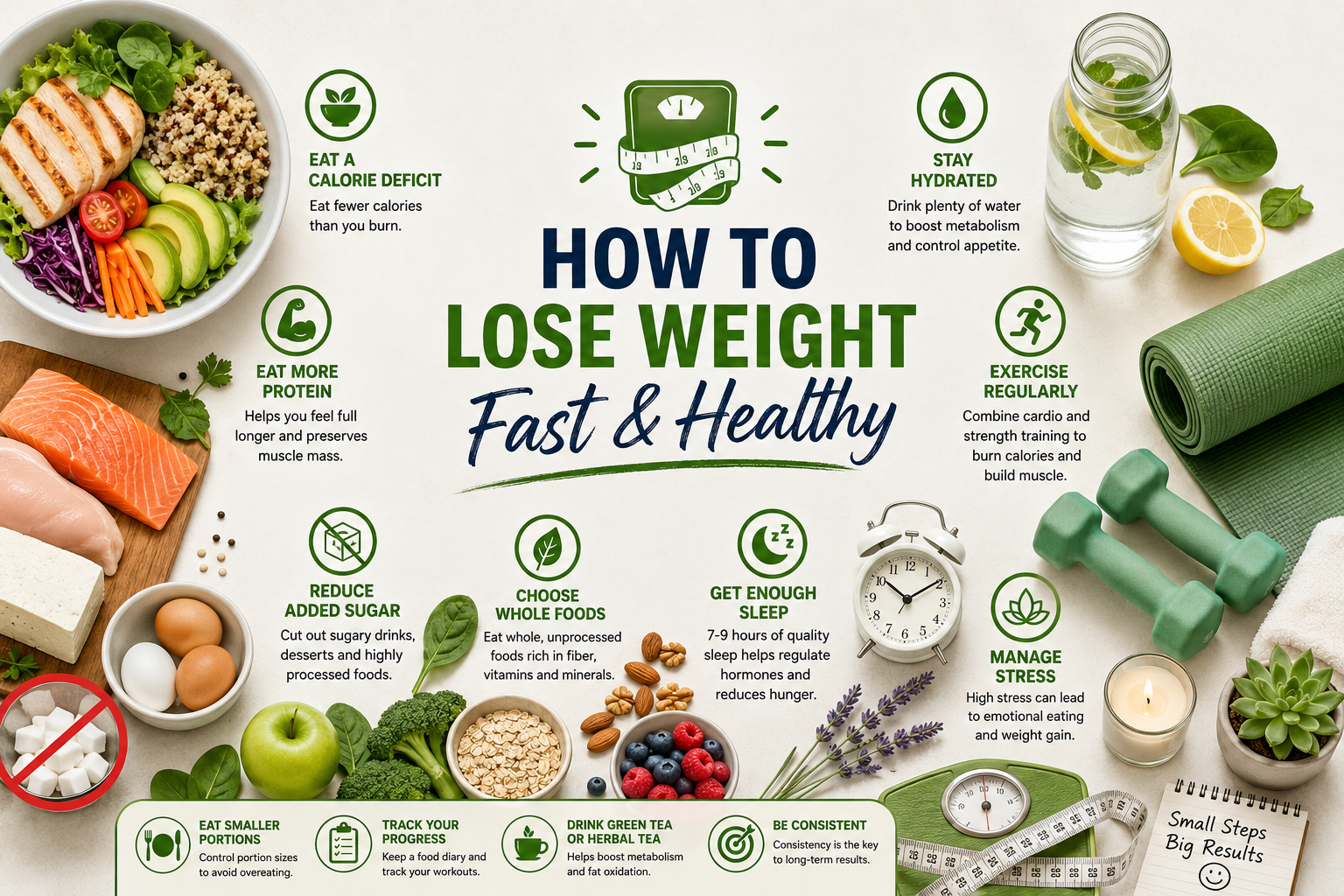
Weight loss occurs when your body burns more calories than it consumes. Creating a moderate calorie deficit through a nutritious diet and increased physical activity helps your body use stored fat for energy. Avoid severely restricting calories, as this can slow metabolism and reduce muscle mass.
Eat More Protein
Protein helps increase feelings of fullness and supports muscle maintenance during weight loss. Including lean protein sources such as chicken, fish, eggs, beans, lentils, tofu, and low-fat dairy in your meals may reduce hunger and make it easier to control calorie intake.
Reduce Added Sugar
Sugary drinks, desserts, and highly processed snacks often contain excess calories with little nutritional value. Reducing added sugars can help lower daily calorie intake while supporting better blood sugar control and overall health.
Choose Whole Foods
Whole foods such as vegetables, fruits, whole grains, lean proteins, legumes, nuts, and healthy fats provide essential nutrients while helping you feel satisfied for longer. Replacing processed foods with nutrient-rich options supports healthier and more sustainable weight loss.
Stay Hydrated
Drinking enough water throughout the day supports metabolism, digestion, and appetite regulation. Sometimes thirst is mistaken for hunger, leading to unnecessary snacking. Drinking water before meals may also help reduce calorie intake for some individuals.
Exercise Every Week
Regular physical activity increases calorie expenditure and improves overall fitness. Combining strength training with cardiovascular exercises such as walking, cycling, swimming, jogging, or dancing helps burn fat while preserving lean muscle mass.
Get Enough Sleep
Sleep plays an important role in weight management. Inadequate sleep can affect hormones that regulate hunger and appetite, making it more difficult to maintain healthy eating habits. Adults should aim for seven to nine hours of quality sleep each night.
Manage Stress Effectively
Chronic stress may contribute to emotional eating and unhealthy food choices. Practicing stress management techniques such as meditation, yoga, deep breathing, or spending time outdoors can support healthier eating behaviors and improve overall well-being.
Consider Healthy Supplements Carefully
Some people use supplements to support their weight loss journey. However, supplements should never replace a balanced diet and regular exercise. If you choose to use weight management supplements, select products from reputable manufacturers and consult a healthcare professional before starting them.
Avoid Crash Diets
Crash diets often promise rapid results but are difficult to maintain and may lead to nutritional deficiencies, muscle loss, and weight regain. Sustainable weight loss comes from healthy habits that you can continue over the long term.
Track Your Progress
Monitoring your food intake, physical activity, body measurements, or weight can help you stay motivated and identify areas for improvement. Small, consistent changes often lead to the most successful long-term outcomes.
Build Healthy Habits for Lasting Results
Fast weight loss should never come at the expense of your health. Focusing on balanced nutrition, regular exercise, proper hydration, sufficient sleep, and realistic goals provides the best foundation for achieving and maintaining a healthy weight. Long-term consistency is more effective than short-term extreme approaches.