What Is the Link Between Vitamin Deficiency and Hair Loss?
Hair requires a constant supply of vitamins and minerals to grow strong and healthy. When the body lacks essential nutrients, the hair growth cycle can become disrupted, causing excessive shedding, thinning hair, or slower regrowth. While genetics and hormones also influence hair health, vitamin deficiencies are among the most common nutritional causes of hair loss.
Why Vitamins Are Important for Healthy Hair
Hair follicles are among the most active cells in the body. They rely on nutrients to produce new hair strands, maintain healthy scalp circulation, and support the hair growth cycle. Without sufficient vitamins and minerals, hair may become weaker, thinner, and more likely to fall out.
Vitamin D Deficiency and Hair Loss
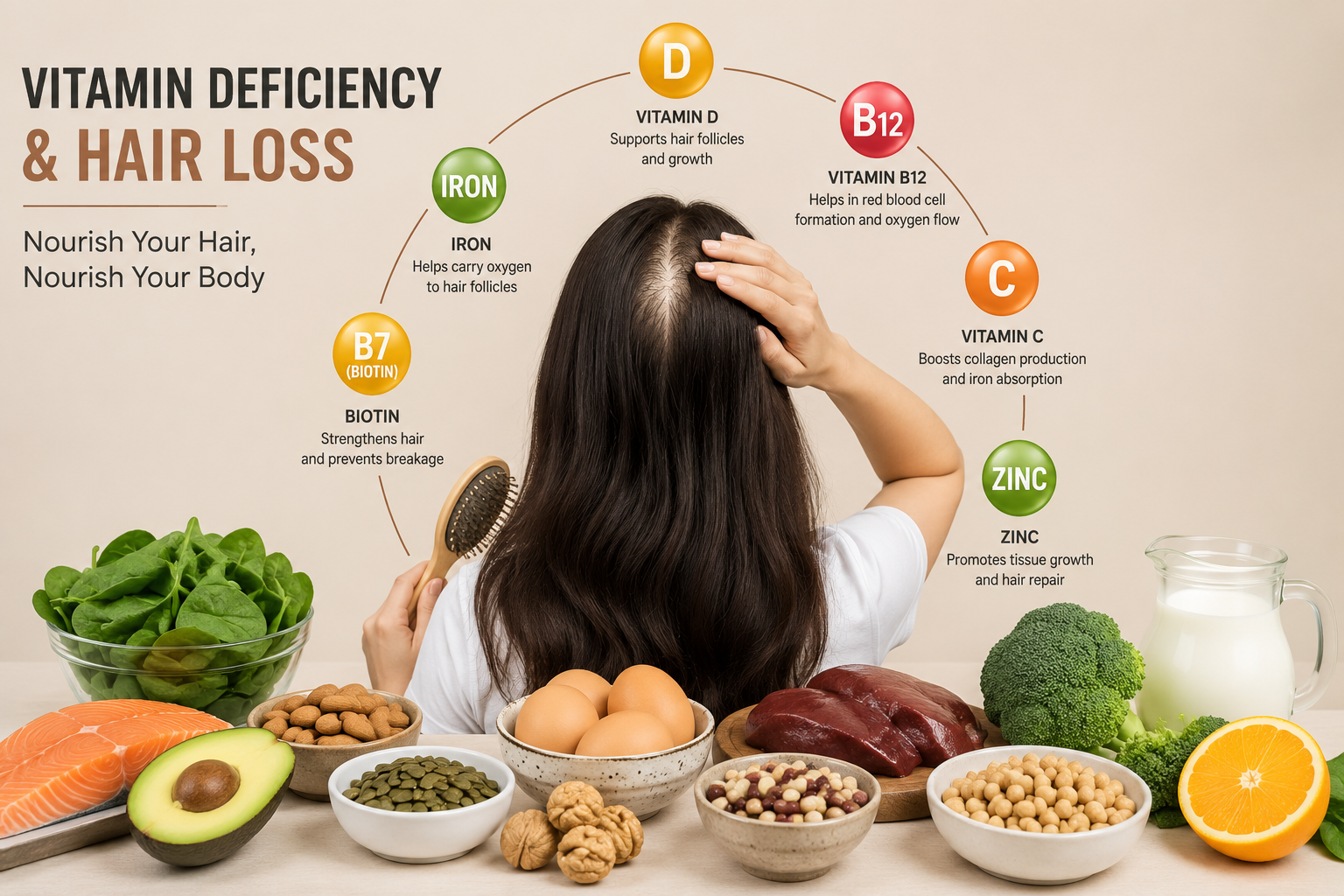
Vitamin D plays an important role in supporting healthy hair follicles. Low vitamin D levels have been associated with increased hair shedding and certain types of hair loss. Spending time outdoors, eating vitamin D-rich foods, and taking supplements when recommended by a healthcare professional may help maintain healthy levels.
Iron Deficiency Can Trigger Hair Shedding
Iron deficiency is one of the leading nutritional causes of hair loss, especially in women. Iron helps red blood cells deliver oxygen to hair follicles, allowing them to function properly. When iron levels are low, hair growth slows, and excessive shedding may occur.
The Role of Biotin
Biotin, also known as vitamin B7, helps the body produce keratin, the protein that forms hair. Although true biotin deficiency is uncommon, inadequate levels may contribute to brittle hair and increased hair breakage. Foods such as eggs, nuts, seeds, and whole grains naturally contain biotin.
Vitamin B12 Supports Hair Growth
Vitamin B12 is essential for healthy red blood cell production and oxygen delivery throughout the body. A deficiency may reduce the nutrients reaching hair follicles, resulting in slower hair growth and increased hair loss. Individuals following vegetarian or vegan diets should pay particular attention to maintaining adequate vitamin B12 intake.
Vitamin C Helps Strengthen Hair
Vitamin C supports collagen production, which contributes to stronger hair structure. It also improves iron absorption from plant-based foods and acts as an antioxidant that protects hair follicles from oxidative stress. Citrus fruits, berries, kiwi, and bell peppers are excellent dietary sources.
Zinc Deficiency and Hair Health
Zinc contributes to tissue growth, cell repair, and healthy hair follicle function. Insufficient zinc intake may lead to hair thinning, slower growth, and increased shedding. Maintaining adequate zinc levels through a balanced diet helps support healthy hair development.
Can Multiple Deficiencies Affect Hair?
Yes. Hair health depends on a combination of vitamins, minerals, protein, and overall nutrition. Deficiencies in several nutrients at the same time may have a greater impact on hair growth than a single deficiency. A balanced diet is generally the best approach for supporting healthy hair.
Foods That Support Healthy Hair
Eating a nutrient-rich diet provides the building blocks needed for strong hair growth. Lean proteins, eggs, fish, leafy green vegetables, beans, nuts, seeds, dairy products, berries, citrus fruits, and whole grains all supply important vitamins and minerals that nourish hair follicles.
Should You Take Hair Supplements?
Hair supplements may be beneficial for people with confirmed nutritional deficiencies or increased nutrient requirements. However, taking high doses of vitamins without medical guidance is not always recommended. A healthcare professional can determine whether supplementation is necessary through dietary assessment or laboratory testing.
Healthy Habits for Stronger Hair
Healthy hair depends on more than nutrition alone. Managing stress, getting enough sleep, staying hydrated, avoiding excessive heat styling, and using gentle hair care products all contribute to stronger, healthier hair over time. Combining healthy habits with proper nutrition provides the best support for long-term hair growth.
When to See a Healthcare Professional
If you experience sudden hair loss, severe thinning, or hair shedding that continues for several months, it’s important to seek medical advice. Hair loss may result from nutritional deficiencies, hormonal changes, thyroid disorders, medications, or other underlying health conditions. Early diagnosis can help identify the cause and improve treatment outcomes.
Short Description
Discover how vitamin deficiencies contribute to hair loss, which nutrients support healthy hair growth, and natural ways to maintain stronger, healthier hair.